

Harnessing Ocean Power: Wave Energy Breakthroughs
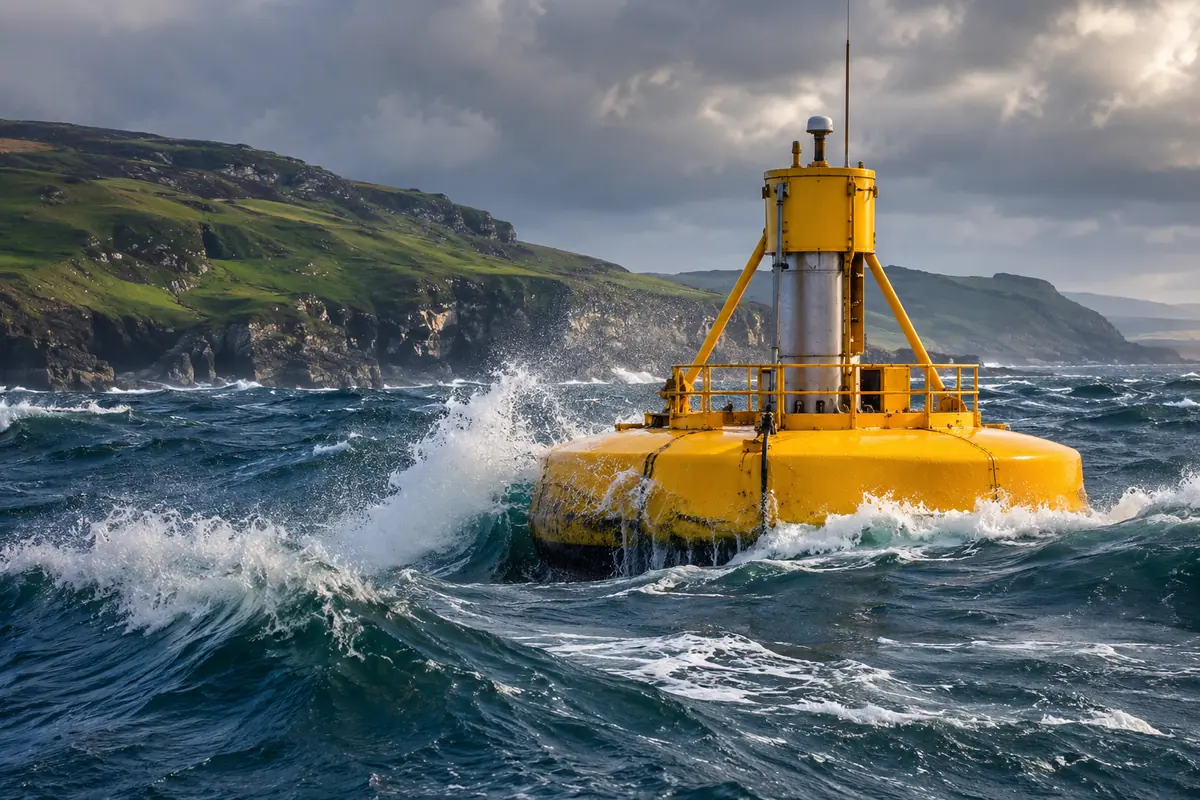
A point-absorber buoy turns the rise and fall of waves into power
Waves carry energy across whole oceans and arrive at coastlines day and night, which makes them one of the most predictable renewable resources. After decades of prototypes, wave energy is moving from single test devices to small arrays that feed the grid.
How Wave Energy Converters Work
Every converter turns the up-and-down or back-and-forth motion of water into electricity. Four designs lead the field:
- Point absorbers: floating buoys that drive a generator as they rise and fall with each wave
- Oscillating water columns: chambers open to the sea where moving water pushes air through a turbine
- Attenuators: long, jointed structures that flex along the wave direction and pump hydraulic fluid
- Overtopping devices: ramps that let waves spill into a raised reservoir, which drains through low-head turbines
From Prototypes to Arrays
Test Centres Lower the Risk
Shared, pre-permitted test sites have changed how developers work. Instead of laying their own export cables, teams plug devices into an existing berth and get independent performance data:
- The European Marine Energy Centre in Orkney, Scotland has hosted more wave and tidal devices than any other site
- PacWave South off the Oregon coast offers grid-connected berths for full-scale US devices
- Shared monitoring lets investors compare designs on the same sea state
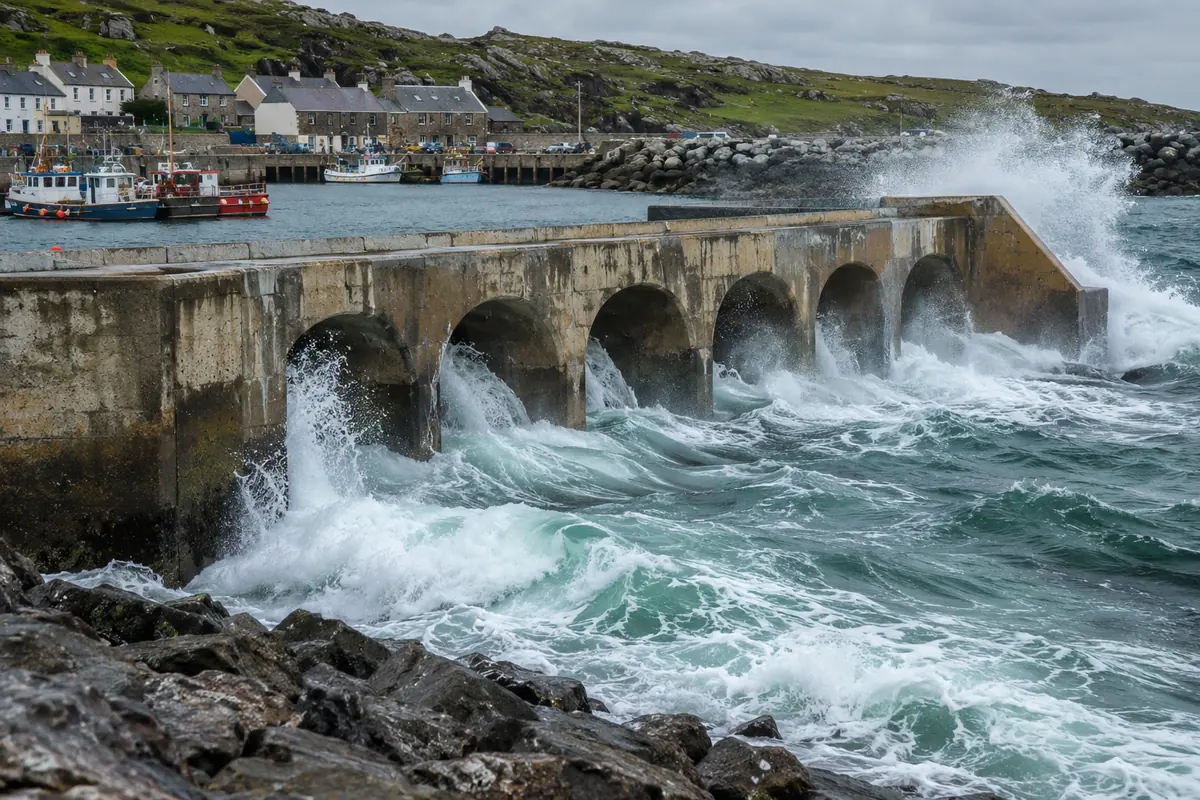
Oscillating water columns built into a breakwater
Breakwater Plants
Building converters into harbour walls solves two problems at once. The Mutriku plant in Spain's Basque Country has used oscillating water columns inside its breakwater since 2011, proving that wave power can run for years alongside normal port operations.
The Challenges Still Ahead
- Survivability: devices must ride out storms many times stronger than the waves they are designed to harvest
- Maintenance: every trip offshore is expensive, so designs favour sealed, low-part-count machines
- Cost: wave power is still well above offshore wind per megawatt-hour and needs volume to come down
- Marine life: developers monitor noise, collisions and seabed effects before scaling up
Why It Matters for the Grid
Waves keep coming after the wind drops and after the sun sets, and they can be forecast days ahead. Paired with offshore wind on shared foundations and cables, wave energy could smooth the output of coastal renewable hubs and reduce the storage they need.